Book Appointment Now

Cracking the Craft Beer Bottling Line: 2025 Investment & Supplier Guide
Investment – Understanding the Cost of a Craft Beer Bottling Line
In the world of craft beer, flavor is king. To consistently deliver that handcrafted taste to your customers, the right beer bottling line is essential. As a brewery owner or potential investor, you may be asking: “How much does a bottling line really cost?” or “Which brands offer the right equipment for me?” Don’t worry—let’s dive into these questions with 2025’s market environment in mind.
1. Capacity Determines Cost
Your production scale is the single biggest cost driver. Generally:
-
Small Craft Brewpubs (Daily Output: 500–5,000 Bottles)
If you’re just getting started or mainly serving your own bar, a semi-automatic bottling line is usually the most cost-effective choice.
Typical setup: manual bottle unscrambler, 6–12 head isobaric filler, semi-automatic capper.
Total investment: around CNY 100,000–300,000.
Benefits include a small footprint (≤20 m²) and operational flexibility—perfect for small-batch, multi-variety production. -
Regional Craft Breweries (Daily Output: 10,000–100,000 Bottles)
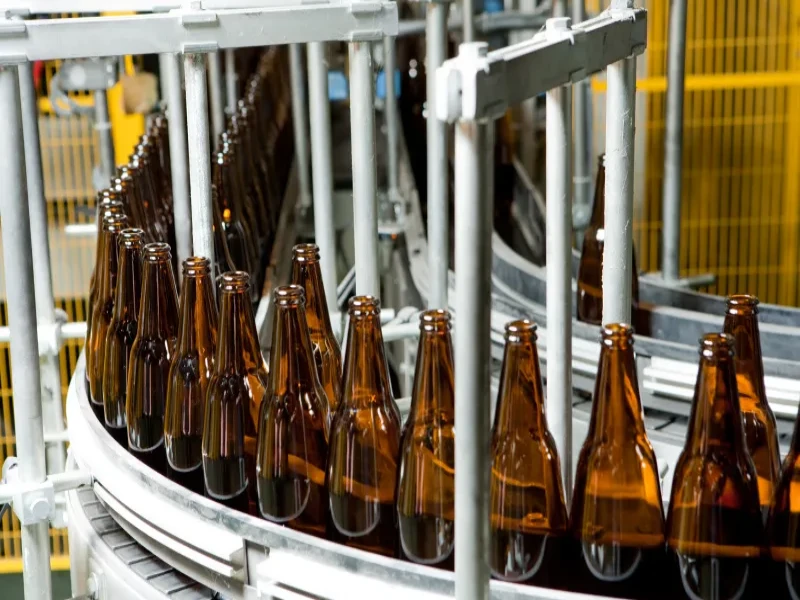
As your brand grows and reaches a wider market, a fully automated bottling line becomes essential.
Features include high automation, filling precision (±1.5 ml/500 ml bottle), low breakage rate (≤0.1‰), and high efficiency (OEE ≥85%).
Equipment investment: typically exceeds CNY 1,000,000. -
Large Craft Breweries (Daily Output: 100,000+ Bottles)
For brands planning mass production or export, investment in high-speed, fully automated production lines is a must.
These lines can reach 60,000 bottles/hour or more, with low failure rates per shift (≤0.5) and multiple online quality inspection modules.
Total investment: several million RMB.
2. Visible & Hidden Costs
Considering only the machine price is not enough. You must include “hidden costs” in your budget:
-
Equipment Cost: The direct purchase price.
-
Installation & Commissioning: Often provided by the supplier but may be billed separately.
-
Training: Critical to ensure your team can operate and maintain equipment. Quality suppliers usually include training.
-
Maintenance & Spare Parts: Regular service is needed—e.g., silicone gaskets on filling valves typically need replacing every 1,000 hours. Keeping a small stock of spares is recommended.
-
Utilities: Bottling lines consume electricity, water, compressed air, and CO₂. Choosing energy-efficient systems (like VFD-driven conveyors) helps lower operating costs.
3. ROI: When Will You Break Even?
The key to any investment is payback time. Craft beer bottling line ROI typically ranges from 6 months to 2 years, depending on operations, market strategy, and distribution channels.
For example, a small 500 L/day line can theoretically achieve ROI in 1.5 months under ideal conditions. Realistically, considering market development time, the payback period will be longer.
Mid-sized lines (around 1,500 L/day) usually break even in 6–12 months.
Success depends on differentiating your beer to justify premium pricing and expanding sales channels (bars, restaurants, e-commerce) to accelerate cash flow.
Choosing a Reliable Bottling Equipment Supplier
Once you have a budget and capacity in mind, the next step is finding the right partner. With so many brands on the market—beyond the global giants—how do you choose?
🔧 Core Technology Matters
Top-tier bottling equipment manufacturers focus on technology that safeguards beer quality:
-
Isobaric Filling: The heart of beer packaging. CO₂ is injected into the bottle first to equalize pressure with the bright beer tank, allowing beer to flow smoothly and minimizing foam. This keeps CO₂ loss below 3% and ensures stable carbonation.
-
Low-Oxygen Technology: Oxygen is beer’s number one flavor enemy. Advanced systems use double pre-evacuation and CO₂ purging to remove oxygen from bottles and the filling process—significantly extending freshness.
-
Sterile Filling & CIP Systems: Hygiene is critical. Equipment should be dead-leg free and include a CIP (Clean-in-Place) system for easy daily cleaning and sanitization.
-
Smart & Flexible Production: Modern lines increasingly adopt IIoT (Industrial Internet of Things) technology for real-time monitoring and predictive maintenance. Quick changeover capability (e.g., within 30 minutes) between different bottle/can formats—330 ml glass, 500 ml cans—is essential for small-batch, multi-SKU production.
🤝 What to Look for in a Supplier
When choosing a partner, don’t just evaluate the hardware:
-
Industry References: Request case studies or visit sites with similar capacity and application to yours. Observe equipment in real-world operation.
-
Customization Capabilities: Craft brewing is all about variety—make sure your supplier can adapt equipment to your exact needs.
By following these guidelines, you’ll be able to make smarter investment decisions, stand out in the competitive craft beer market, and build a bottling line that becomes the foundation for your brand’s future success.